
With the growing global trend towards clean beauty, holistic wellness, and plant-based lifestyles, there has been a significant rise in the demand for natural essential oils. Whether it’s through luxury skincare lines or small aromatherapy start-up shops, many companies are focused on using pure, ethically sourced, and safe natural essential oils rather than synthetic alternatives.
According to the experience of professionals in the industry, the quality of essential oils has a direct impact on the performance of products made with them. If essential oils were extracted using poor extraction techniques, they will contain fewer therapeutic properties and cause sensitivity to the skin. This is why professional aromatherapy, skincare, and wellness brands rely on trusted essential oil suppliers, standardised testing, and adherence to internationally recognised manufacturing practices, such as GC-MS testing, GMP compliance, and IFRA adherence.
This is a comprehensive guide on what natural essential oils are, their benefits, how to identify the best essential oil brands, and how to choose reliable organic essential oil wholesale suppliers for long-term success.
What Are Natural Essential Oils?
Natural essential oils are derived from plant materials through physical methods (e.g., steam distillation, cold-pressing). The process by which these oils are produced captures the natural aroma and benefits of the plant without any chemical changes.
Types of Essential Oils
- Natural Essential Oils: Plant-derived oils that did not experience any chemical alteration.
- Organic Essential Oils: Plant-derived oils produced from organic farms that have been certified by an authorised certification body.
- Synthetic Essential Oils: Man-made aromatic products created by chemical processes.
Why Does Purity Matter?
The purity of an essential oil is directly related to its safety and efficacy. Pure, high-quality natural essential oils are
- Safer for use in diffusers.
- Reduced chance of causing an allergic reaction.
- Suitable for more skin types and sensitivities.
- More powerful when used for therapeutic purposes.
Pure, high-quality natural essential oils used in skincare/wellness products must not contain any impurities (even trace amounts), as this could affect effectiveness as well as compliance with regulatory requirements.
Why Natural Essential Oils Are Preferred for Aromatherapy, Skincare & Wellness
Benefits in Aromatherapy
- Reducing Stress & Anxiety
- Improving Sleep Quality
- Balancing Emotions
- Enhancing Mental Clarity
Benefits in Skincare
- Anti-Inflammatory Properties
- Bacteria-Fighting Ability
- Acne Control
- Nourishment for Your Skin
Benefits in Wellness & Holistic Healing
- Mind-Body Harmony
- Ease Breathing
- Strengthen the Immune System
- Promote Relaxation
Essential Oils Have Many Uses And Are Frequently Incorporated into Today’s Wellness Products.
Also explore: Top 7 Benefits of Essential Oil
Most Popular Natural Essential Oils & Their Uses
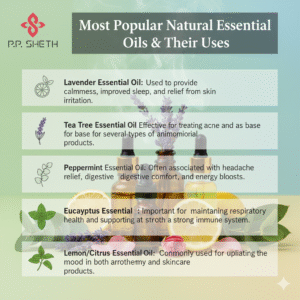
The oils listed here have ranked consistently high among professional formulations:
- Lavender Essential Oil: Used to provide calmness, improved sleep, and relief from skin irritation.
- Tea Tree Essential Oil: Well known to be effective for treating acne and as a base for several types of antimicrobial products.
- Peppermint Essential Oil: Often associated with headache relief, digestive comfort, and energy boosts.
- Eucalyptus Essential Oil: Important for maintaining respiratory health and supporting a strong immune system, it is often found in many inhalers and balms.
- Lemon/Citrus Essential Oil: In addition to its use for detoxification, lemon/citrus essential oil is commonly used for uplifting the mood in both aromatherapy and skincare products.
These oils are the cornerstone of many natural and essential oil companies.
How to Identify the Best Essential Oil Brands
Choosing reliable manufacturers ensures consistency and safety.
Quality & Purity Standards
Look for brands offering:
- Gas Chromatography-Mass Spectrometry (GC-MS) testing reports
- No Synthetic Additives
- Clearly Defined Botanical Labels
Ethical & Sustainable Sourcing
Responsible brands will provide their customers with:
- Traceability of all raw materials used in their oils
- Sustainable harvesting methods
- Fair trading partnerships with farmers
Certifications to Look For
- USDA Organic Certification
- ECOCERT Certification
- ISO Certification
- GMP Compliance
These certifications serve as benchmarks that indicate which brands of oils are the best on the global marketplace.
Role of Organic Essential Oils Wholesale Suppliers
Why Brands Choose Organic Oils
Organic oils are good for brands because:
- Clean Beauty Consumer
- Compliance with Regulated Industry Standards
- Premium Wellness Brands
What Wholesale Buyers Should Check
Before Partnering
- Minimum Order Quantity (MOQ)
- Scalability of Production
- Consistent Quality Of Batches
- Certificate of Analysis (COA) and Material Safety Data Sheet (MSDS)
Industries SERVED BY THESE SUPPLIERS:
- Skin Care & Cosmetics
- Aromatherapy Brands
- Spas & Wellness Centres
Professional organic essential oil wholesale suppliers will provide a stable supply chain required for brand growth.
Essential Oil Suppliers – What Makes a Trusted Supplier?
Manufacturing & Extraction Expertise
Some of the best suppliers utilise:
- Steam distillation for herbs/woods.
- Cold-pressed methods of extracting citrus oils.
- No solvent extraction for therapeutic grades
Compliance & Quality Assurance
A trusted essential oils supplier will be in full compliance with IFRA standards and provide the following assurances about their products:
- IFRA conformity
- Batch traceability
- Regular lab testing
Domestic & Export Capabilities
- International shipping
- Regulatory documentation
- Multi-country compliance
A strong essential oil supplier will protect the buyer’s brand from operational risks.
Natural vs Organic Essential Oils: Key Differences Explained
| Feature | Natural | Organic |
| Source | Plant-based | Certified organic plants |
| Farming | Conventional | Chemical-free |
| Certification | Not required | Mandatory |
| Cost | Moderate | Higher |
Which should you choose?
- For skincare & baby products, choose organic.
- For Aromatherapy & spa use, choose natural or organic
- For Large-scale formulations, choose High-grade natural
Both types have value depending on application and market positioning.
Applications of Natural Essential Oils Across Industries
- Aromatherapy & Spa Industry: Aromatherapy diffusers, massage oils, and relaxation therapy.
- Beauty, Skincare and Personal Care Products/Brands: Perfumes, Serums, Creams, Soaps, Shampoo
- Wellness, Yoga, and Ayurveda Products: Rolled-on oils, massaging balms, healing oil blends, herbal oils
Strategically utilising these types of products increases product desirability and customer loyalty.
How to Choose the Right Essential Oil Supplier for Your Brand
When choosing suppliers, consider:
- Experience in the industry
- Transparency in testing
- Certifications
- Support for custom formulations
- Surety of long-term supply
Visit: How to Choose the Right Essential Oil Supplier
Having a good working relationship with your suppliers creates the environment to produce consistent quality products.
FAQs About Natural Essential Oils & Suppliers (EEAT Booster)
Frequently Asked Questions about Natural Essential Oils and Their Suppliers
Are natural essential oils safe for direct skin use?
Essential oils must be diluted with a carrier oil to avoid skin irritation.
How can I verify essential oil supplier authenticity?
Legitimate suppliers typically have laboratory testing, certifications, documented procedures for extraction, and an extensive record of past clients.
What is the shelf life of natural essential oils?
Typically between 1 and 3 years, based on the kind of oil and how it is stored.
Do organic essential oil wholesale suppliers offer private labelling?
Yes, most wholesale suppliers of organic essential oils provide OEM (original equipment manufacturer) and white label services.
Conclusion
High-quality natural essential oils form the base of successful aromatherapy, skincare and wellness products. Partnering with the best essential oil brands and trusted organic essential oil wholesale suppliers are the most reliable indicators of product safety and regulatory compliance and provide the best long-term credibility for a brand.
As consumer spending shifts toward more conscious purchases, the quality and transparency of a brand are becoming essential elements of a successful business.