Essential oil manufacturers in India are renowned as superior global sources of high-quality aromatic botanicals and thus have created an unending demand for pure-quality oils among consumers. Demand for pure and high-quality oils continues to increase based on the Ayurvedic tradition and today’s popularity with a variety of health-related trends. With all these different options available, how do you tell which oils are premium quality versus those that are diluted or of inferior quality?
In this guide, you will discover what goes into defining quality so that you can feel more confident making choices among the best essential oil brands and the best suppliers, as well as where to buy from reliable companies in the essential oil category.
Difference Between Therapeutic Grade and Industrial Grade Essential Oils
The first step in decision-making is to understand oil grades.
Therapeutic Grade Essential Oils
- Extracted in such a way as to contain as much of the plant’s natural components as possible.
- Free of synthetic ingredients or fillers.
- Used for aromatherapy, skin care, and wellness purposes.
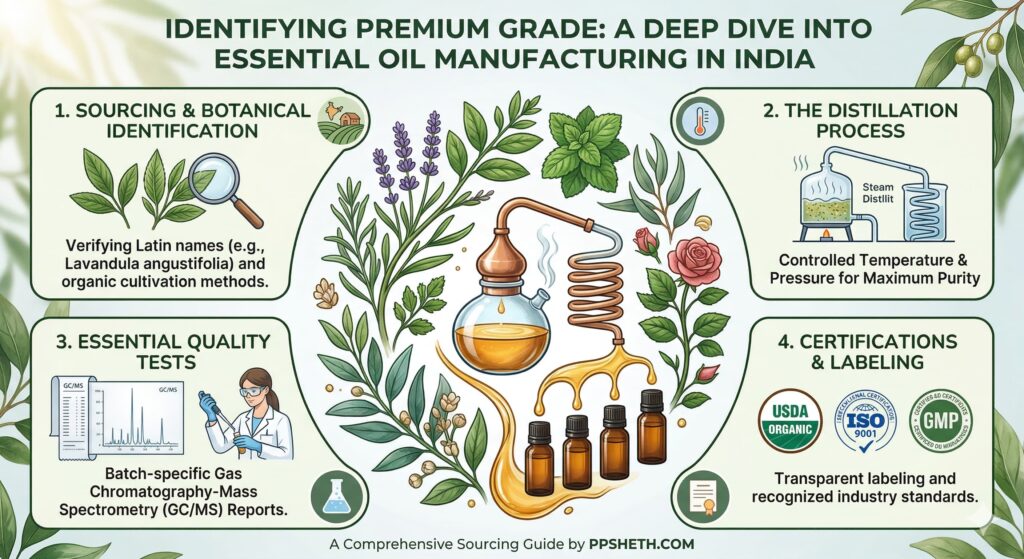
- Subject to very strict testing methods, including GC/MS testing.
Industrial Grade Essential Oils
- Primarily used for fragrance, cleaning, or manufacturing purposes (e.g., perfume).
- May contain solvents and/or synthetic additives.
- Lower cost but unsuitable for therapeutic and/or topical use.
While “therapeutic grade” can be commonly used in the marketing of oils, the highest quality of oil is based upon its purity, origin, and transparency of the producer (“the label” only).
How Essential Oil Manufacturers in India Ensure Batch Consistency
Quality and consistency across batches are the challenges for manufacturers of natural products. Leading essential oil manufacturers in India rely on very strict quality control to ensure consistency.
Key practices include the following:
- Standardised Sourcing: Working with farmers to ensure that plants are harvested at the same time and that they have the same quality.
- Advanced distillation techniques: All distillation processes, including steam distillation and cold pressing, are conducted in a manner that will achieve maximum yield and retain the quality of oils.
- Batch Testing & Certification: Each batch is tested using GC/MS to ensure that the oils are of the same chemical composition.
- Storage & Handling Protocols: Oils are stored in a controlled environment to prevent any sort of oxidation and/or contamination.
Through this type of precision and testing, whether you purchase 1 bottle or 1 case, you can be assured of receiving an essential oil that is of the highest quality.
Navigating the Wholesale Bulk Essential Oils Suppliers Market Safely
Finding the right wholesale bulk essential oils suppliers is critical to your business’s ability to source large quantities of raw materials.
Here is what you should look for in a supplier:
- Certification and Documentation:
Always ask for a Certificate of Analysis (COA) and/or Material Safety Data Sheet (MSDS) before making purchase agreements with suppliers.
- Transparency in Source:
Suppliers should clearly explain the origin, extraction method, and purity level of all plants used in their oils.
- Minimum Order Quantity (MOQ):
Understand how orders are priced and what your ordering limits will be when sourcing oils.
- Supplier Reputation / Reviews:
Look for suppliers that have solid credibility within their industry and export experience.
Red Flags to Avoid:
- Pricing that seems “too good to be true”
- No testing documentation available
- Vague or missing botanical name(s) on labels
When you work with trusted suppliers, you maintain the integrity of your products and protect your brand’s reputation.
Sustainability in Extraction: The Rise of Organic Sourcing
Sustainable extraction practices have led to the growing trend towards organic sourcing of essential oils.
More consumers are now more aware of sustainability, and therefore the leading 10 essential oil manufacturers in India have had to adapt to the growing demand for eco-friendly operating practices.
Some of the sustainable trends taking place include:
- Organic farming practices (monoculture vs. polyculture)
- Avoiding the use of pesticides and synthetic fertilizers
- Sourcing ethically
- Support local farmers and fair trade initiatives
- Using low-impact extraction methods (reduce the amount of water and energy used to distil the essential oils)
- Using eco-friendly packaging (made from recyclable or recycled materials) and reducing the amount of plastic waste produced
Sustainability is no longer only a trend, but it is becoming an essential feature in the marketplace for the best essential oil brands.
Conclusion
When considering how to select an essential oil, it is important to remember it goes beyond scent; it is about purity, safety, and how long it will last. This is why understanding grading of oils, consistency, supplier credibility, and sustainability will help you successfully navigate the expanding market of essential oil manufacturers in India.
No matter if you are a retailer, a wellness brand, or an individual, you should always find suppliers that are transparent with their businesses and offer products that are of high quality.
Visit our Essential Oils category page to find high-quality essential oils manufactured by reliable suppliers and enhance your product or your wellness journey.
Frequently Asked Questions (FAQs)
1. Are essential oils from India high quality?
Yes, due to its high level of biodiversity and methods of extraction, India is a dominant player in producing quality essential oils.
2. What certifications should I check before buying bulk oils?
Ensure you have a GC/MS report, a COA (Certificate of Analysis), and, if applicable, organic certifications.
3. How can I identify pure essential oils?
Look for the use of scientifically accurate botanical names, the source of the raw product, and the name of a third party that has tested the oil.
4. Is organic essential oil always better?
Organic essential oils are considered the highest quality because there are no synthetic chemicals used in their manufacture.
5. Can I trust all wholesale suppliers?
No; prior to anything else, check the supplier’s credentials, obtain documentation, and check their reputation using third parties.
Most Recent Posts