The worldwide personal care market is growing quickly due to increased consumer interest, a desire for premium products, and the need for safe but effective personal care products. Brands today are asked to provide products across a variety of categories, such as skincare, haircare, deodorants/antiperspirants, and colognes/perfumes. Brands today are expected to have formulations that are effective, stable, and compliant and also pleasant to the senses.
Speciality raw materials are at the centre of this industry evolution, creating new opportunities for improving performance, safety, and differentiation. The role of a reliable speciality raw material manufacturer is critical to enable a brand to innovate effectively and consistently produce high-quality products. Fragrance ingredients and functional activities have become two of the largest areas of growth and are the main components influencing consumer experience and building brand identity.
Understanding Specialty Raw Materials in Personal Care
What Are Speciality Raw Materials?
Speciality raw materials are considered advanced ingredients in the development of different types of personal care formulations. Many of these materials have specific benefits relating to the allergen or sensory aspects of the formulation.
Certain properties include the following:
- High purity and consistency
- Functional or performance-enhancing properties
- Regulatory and safety certifications
- Customisation potential for targeted applications
The primary difference between commodity ingredients and speciality raw materials lies in value and functionality. While commodity ingredients serve for basic formulation requirements, speciality raw materials offer added value to consumers because they improve the stability, efficacy and appeal of the final product.
As speciality raw materials continue to grow in popularity, more and more consumers are turning to speciality raw material manufacturers with strong technical expertise.
Why Quality Raw Materials Matter in Personal Care Formulations
The raw material quality of personal care products directly influences how successful the product will be. The best quality speciality-type ingredients guarantee:
- Formulation stability over shelf life
- Efficacy of active ingredients
- Safety for skin and hair contact
- Consumer trust and brand credibility
In addition to the high-quality raw materials being a major factor in the success of your product(s), worldwide cosmetic regulations require companies to adhere to rigorous quality standards. Therefore, in order to meet international standards of IFRA, ISO and GMP, raw materials must be sourced from reputable fragrance chemical manufacturers and speciality ingredient suppliers to minimise the risk associated with formulations and the length of time required to enter the market.
Key Categories of Specialty Raw Materials Used in Personal Care
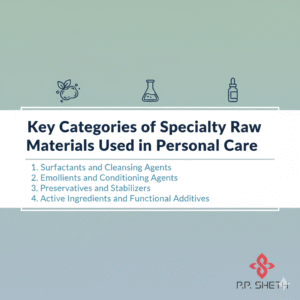
1. Surfactants and Cleansing Agents
Surfactants (also known as cleansing agents) provide the cleansing, lathering, and tactile qualities found in shampoos, facial cleansers, body washes, and hand washes.
- For sensitive skin, mild surfactants (sulphate-free) are usually the surfactants of choice.
- High-performance surfactants offer superior cleansing and lather performance.
Experienced speciality raw material manufacturers help brands select surfactants that balance performance with skin compatibility, especially for premium and dermatologically tested products.
2. Emollients and Conditioning Agents
Emollients and conditioning agents provide superior feel, softness and moisture retention to skin, hair and nails when included in the formulation of a cream, lotion, conditioner or serum. They play an important role in the overall sensorial profile of a formulated product.
- Natural emollients, such as plant oils and butters, are popular among clean beauty brands.
- Synthetic emollients provide the highest levels of consistency and enhanced spreadability.
With the ever-increasing demand for sustainable & bio-based emollients, raw material suppliers are innovating responsibly, allowing them to meet consumer needs without sacrificing quality or performance.
3. Preservatives and Stabilizers
Preservatives protect a variety of consumer products against microbial contamination and increase the shelf life of those products.
- Common types of preservatives are organic acids, parabens, and varying mixtures of each.
- Stabilisers help maintain formulation integrity under varying storage conditions.
When looking for preservative sources, it is important to make sure the supplier has the appropriate compliance to meet each region’s regulatory requirements and provides good documentation, as well as has global regulatory knowledge.
4. Active Ingredients and Functional Additives
The efficacy of modern skincare and haircare products is the result of their active ingredients, which include:
- Anti-ageing agents (peptides, retinoids)
- Moisturising active ingredients (hyaluronic acid, ceramides)
- Soothing active ingredients (niacinamide, allantoin)
- UV-blocking active ingredients.
Typically, brands partner with suppliers of specialised ingredients who can assist in both innovation and creation of a formulated product with claims to targeted performance.
Specialty Fragrance Raw Materials in the Personal Care Industry
Role of Fragrance in Personal Care Products
Fragrance has the ability to greatly influence how consumers view and feel about their relationship with certain products. A fragrance associated with a brand is a part of the identity of a brand, and it can help create a better experience for the consumer and increase the likelihood that they will continue to purchase that product.
Fragrance systems that are long-lasting and safe for the skin are critical when developing leave-on personal care products. As a result, building a collaborative relationship with a fragrance chemical manufacturer is essential for success.
Fragrance Chemicals Used in Personal Care Formulations
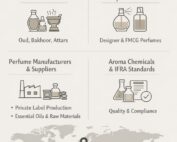
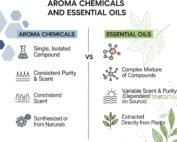
Fragrance formulations typically consist of:
It is imperative that reputable fragrance chemical manufacturers maintain consistency in their manufacturing processes, ensure compliance with International Fragrance Association (IFRA) regulations and provide safe products so that brands can deliver consistent scent profiles from batch to batch and across markets.
Importance of Bulk Sourcing for Fragrance Ingredients
Bulk sourcing is critical to the cost-effective and reliable supply of fragrance ingredients as the production of fragrances continues to grow. Working with trusted bulk fragrance suppliers offers:
- competitive prices,
- consistent availability,
- stable batch-to-batch quality
Bulk sourcing also minimises supply chain disruptions, particularly for high-volume personal care brands.
Also Explore: How to Scale Your Perfume Business Using Bulk Fragrance Oils
Role of Fragrance Wholesale Distributors in the Supply Chain
Fragrance wholesale distributors play a vital role as intermediaries between manufacturers and brands. They provide brands:
- Faster access to a wide fragrance portfolio
- Technical & regulatory support
- Local availability with global compliance
Wholesale distributors ensure traceability and quality documentation, allowing brands to simplify their sourcing processes while ensuring compliance with regulations.
How Specialty Raw Material Manufacturers Support Innovation
Leading speciality raw material manufacturers go beyond supply by enabling innovation through:
- Strong R&D and customised ingredient development
- Technical data sheets and formulation assistance
- Compliance with international cosmetic regulations
By working collaboratively, it enables brands to speed up their product development timelines and also remain competitive in an ever-changing marketplace.
Key Factors to Consider When Choosing a Specialty Raw Material Supplier
Quality and Certifications
Purchasing from a supplier who has achieved ISO, GMP, and IFRA certifications, as well as compliance with local regulations, is important.
Supply Chain Reliability
In order to produce consistently, you need to have reliable partnerships with fragrance wholesale distributors and raw materials partners.
Customization and Technical Support
Suppliers offering formulation guidance and tailored solutions add long-term value beyond pricing.
Market Trends Driving Demand for Specialty Raw Materials
- Rising demand for clean beauty and sustainable ingredients
- Preference for premium and unique fragrance profiles
- Growth of private-label and contract manufacturing
These trends rely on speciality ingredient suppliers, as well as bulk fragrance suppliers, capable of meeting the growing demand for these products. Compassion for the environment is becoming a necessary part of the beauty industry.
Future of Specialty Raw Materials in the Personal Care Industry
Future Trends in Personal Care Products Will Be Influenced By:
- Innovation in fragrance chemistry and functional ingredients
- Green Chemistry and Sustainable Sourcing
- Increased reliance on expert speciality raw material manufacturers
Technology-centric development of ingredients will continue to expand the opportunities for formulation across various categories.
Conclusion
A quality personal care product starts with a quality product that contains safe, effective materials that comply with regulatory standards. A product may contain the appropriate amount of surfactants and active ingredients used in conjunction with an advanced fragrance system to exceed customer expectations.
Strategic collaboration with reliable speciality raw material manufacturers, fragrance chemical manufacturers, and fragrance wholesale distributors ensures consistent quality, scalability, and innovation. For personal care brands seeking long-term success, developing and managing these partnerships are critical to achieving consistent, scalable and innovative products.
Most Recent Posts