
Have you ever noticed the fresh, floral smell of lavender or the light citrus scent of a beautiful perfume? Linalool is one of the fragrance ingredients that can help create these familiar smells.
Linalool is widely used in perfumes, personal care products, and selected flavor applications. It is known for its soft floral, fresh, and slightly woody smell, which makes it useful in many types of fragrance blends.
From fine perfumes and body lotions to soaps and scented shampoos, Linalool has many applications. It can add freshness, support floral notes, and help create a pleasant scent.
Linalool: Uses in Perfume, Cosmetics & Flavors is an important topic for fragrance manufacturers, cosmetic brands, and businesses working with aroma ingredients.
In this guide, we will explain what Linalool is, how it smells, where it is used, and what manufacturers should consider when selecting and using this ingredient.
What Is Linalool?
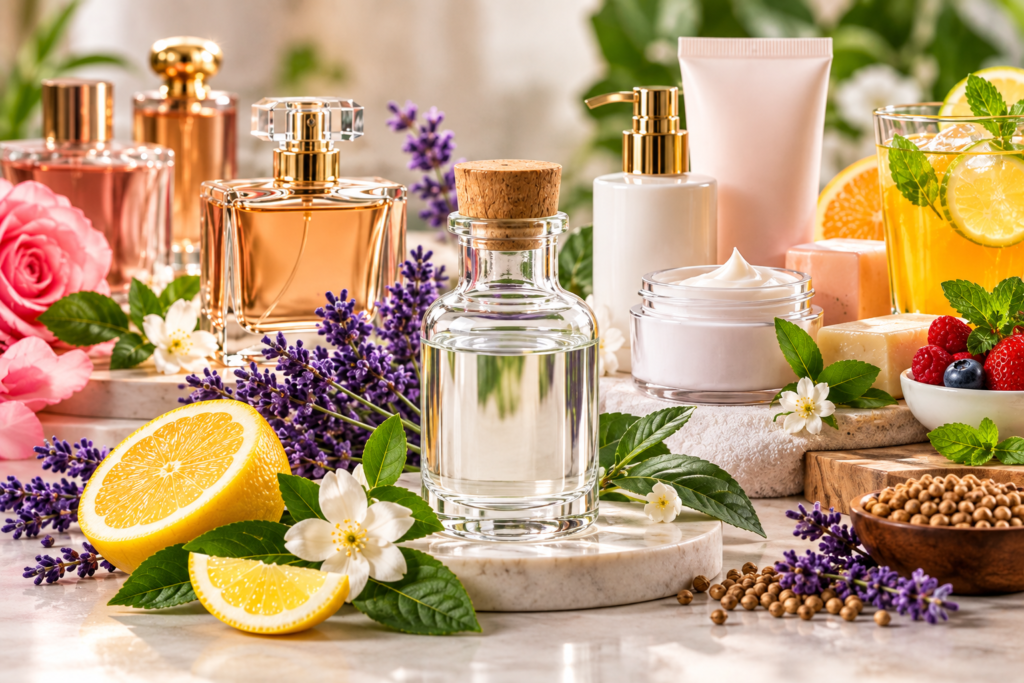
Linalool is a naturally occurring fragrance compound that is also produced for commercial use. It belongs to a group of ingredients called terpenes and is found in several essential oils.
It is commonly found in lavender, coriander, rosewood, and other aromatic plants.
Linalool is popular in the fragrance industry because of its pleasant floral and fresh smell. It can be used on its own or blended with other fragrance ingredients to create different scent profiles.
It is also used in selected flavor applications, where its fresh and floral character can add to the overall taste experience.
The quality, source, and intended use of Linalool depend on the specific grade supplied by the manufacturer.
Is Linalool Natural or Synthetic?
Linalool can come from natural sources or be produced through manufacturing processes.
Natural Linalool is found in essential oils such as lavender oil, coriander oil, and ho wood oil.
Manufactured Linalool is produced to meet different commercial requirements. Depending on the product, it may offer consistent quality and a reliable supply for large-scale production.
Both types can be useful for fragrance development. The right choice depends on the desired scent, product requirements, and sourcing needs.
Why Is Linalool Important in the Fragrance Industry?
Linalool is useful because it can work with many different fragrance ingredients.
Its fresh and floral character makes it suitable for perfumes that need a clean, soft, or slightly sweet smell.
It can also help balance stronger fragrance notes and bring a fresh feeling to a blend.
For manufacturers, Linalool offers flexibility across several product types, including perfumes, soaps, shampoos, and other scented products.
Linalool Odor Profile: What Does It Smell Like?
Linalool is commonly described as fresh, floral, slightly woody, and mildly citrus-like.
Its smell can remind people of lavender, fresh flowers, or light citrus notes. However, the exact odor can vary depending on the source, grade, and other ingredients used in the blend.
Unlike very heavy woody or sweet ingredients, Linalool usually has a light and fresh character.
This makes it useful in fragrances designed for everyday use.
1. Fresh and Floral
One of the main characteristics of Linalool is its fresh floral smell.
It can add a soft flower-like note to a fragrance without making it too sweet or heavy.
This quality makes it useful in floral perfumes, body lotions, and personal care products.
2. Light Citrus Character
Linalool can also have a light citrus-like smell.
This fresh quality works well with ingredients such as bergamot, lemon, and other citrus materials.
It can help create fragrances that feel bright, clean, and refreshing.
3. Soft and Slightly Woody
Some Linalool grades have a gentle woody character.
This quality can help balance fresh floral notes and make a fragrance feel more complete.
It works well in woody, floral, and aromatic perfume blends.
4. Clean and Pleasant
Linalool is often used when a product needs a clean and pleasant fragrance.
It can bring freshness to soaps, shampoos, body washes, and other personal care products.
The final smell depends on the full formula and the amount of Linalool used.
Main Uses of Linalool in Perfume
Linalool is a flexible fragrance ingredient that can be used in many perfume styles.
Its fresh floral character makes it suitable for light everyday fragrances as well as more complex perfume blends.
1. Creating Floral Perfumes
Linalool is commonly used in floral fragrance compositions.
It works well with rose, jasmine, lavender, and other floral notes.
It can help create a soft and fresh floral character without making the perfume feel too heavy.
For example, a perfumer may combine Linalool with rose and jasmine materials to create a light floral fragrance.
2. Adding Freshness to Citrus Perfumes
Citrus perfumes are known for their bright and refreshing smell.
Linalool can work with bergamot, lemon, orange, and other citrus ingredients to create a smooth and fresh fragrance.
It can also help connect citrus notes with floral or woody ingredients.
This makes it useful in everyday perfumes, summer fragrances, and fresh aromatic blends.
3. Supporting Lavender and Aromatic Fragrances
Lavender has a fresh, herbal, and floral smell.
Linalool is naturally present in lavender oil and can be used in fragrance blends that need a similar fresh character.
It works well with ingredients such as lavender, rosemary, and other aromatic materials.
These combinations are often used in personal care fragrances and aromatic perfume styles.
4. Improving Fragrance Balance
A perfume usually contains several ingredients that work together to create the final smell.
Linalool can help connect fresh, floral, and woody notes.
It can make a fragrance feel smoother and more balanced when used correctly.
However, the final result depends on the complete formula and the amount of each ingredient.
5. Adding Freshness to Everyday Perfumes
Linalool is useful in perfumes designed for daily use.
Its light floral character can support fragrances that feel clean, soft, and refreshing.
It can be used in different fragrance styles, including floral, citrus, and aromatic perfumes.
Uses of Linalool in Cosmetics and Personal Care
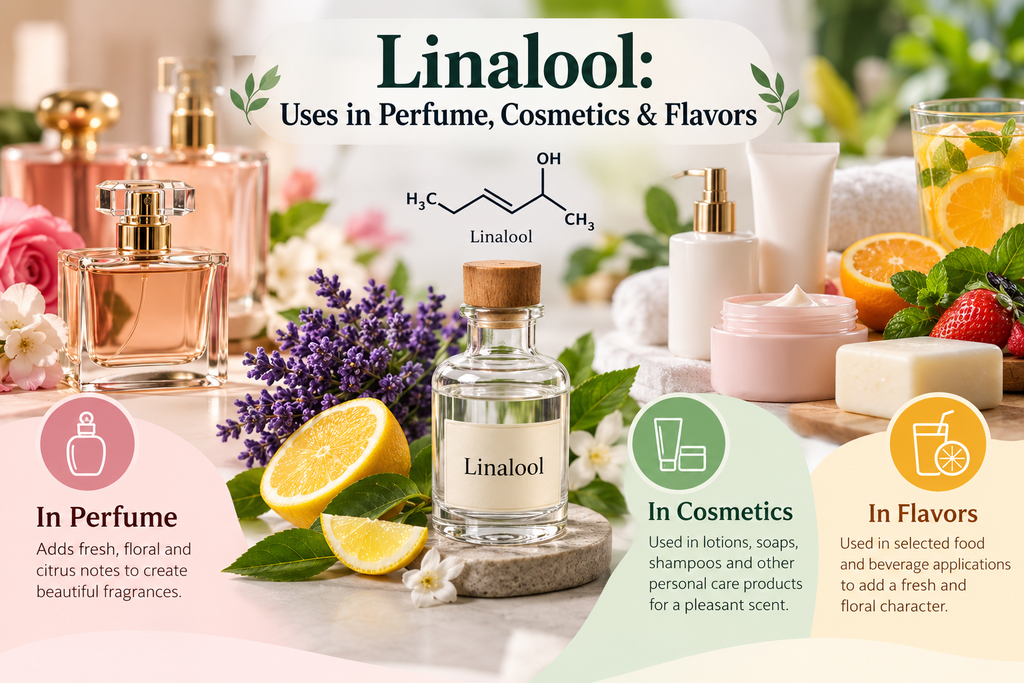
Linalool is also used in many cosmetic and personal care products because of its pleasant smell.
It may be included as part of a fragrance blend rather than used as the only fragrance ingredient.
The final product must meet the safety and labeling requirements that apply to its intended use.
1. Body Lotions and Creams
Linalool may be used in scented body lotions and creams.
It can add a fresh floral smell and work with other fragrance ingredients to create a pleasant scent.
The amount used depends on the finished product, its fragrance formula, and applicable safety requirements.
2. Shampoos and Hair Conditioners
Linalool can be used in scented shampoos and conditioners.
Its fresh and floral character works well with clean, soft, and herbal fragrance styles.
It can also be blended with citrus, lavender, and other fragrance ingredients to create different product scents.
3. Soaps and Body Washes
Soaps and body washes often use fragrance ingredients to create a pleasant scent during use.
Linalool can be included in floral, fresh, and citrus-style fragrance blends.
It can help create a clean and refreshing scent profile for everyday personal care products.
4. Deodorants and Body Sprays
Linalool may be used in fragrance blends for deodorants and body sprays.
Its light floral and fresh character can work well in products designed for everyday use.
The final fragrance depends on the complete blend and the product formulation.
5. Hair Care and Other Scented Products
Linalool may also be used in other scented personal care products.
It can help create fresh and floral fragrance profiles in products where a pleasant smell is an important part of the user experience.
However, every application requires the correct ingredient grade and suitable safety review.
Uses of Linalool in Flavors
Linalool is also used as a flavoring ingredient in certain food and beverage applications when the material is suitable and permitted for that purpose.
Its fresh, floral, and slightly citrus-like character can support different flavor profiles.
However, a fragrance-grade material should not automatically be considered suitable for food use.
Manufacturers must select a food-grade or flavor-grade ingredient that meets the requirements of the intended application and market.
1. Beverages
Linalool may be used in selected beverage flavor formulations.
Its fresh and floral character can complement certain citrus and fruit flavor profiles.
The amount used depends on the flavor formula and the applicable food regulations.
2. Fruit Flavors
Some fruit flavor blends need a light floral or fresh note.
Linalool can be used in selected formulations to support the overall flavor profile.
It may work with citrus and other fruit flavor ingredients, depending on the desired result.
3. Floral Flavor Profiles
Linalool can also be used in flavor formulations that need a light floral character.
Its role depends on the product and the other ingredients in the blend.
Food manufacturers should always use a suitable flavor-grade material and follow the applicable regulations.
4. Flavor Development
For flavor developers, Linalool can be one of several ingredients used to build a complete flavor profile.
The final taste depends on the full formula, the amount used, and how the ingredient works with the other materials.
A small trial is useful before moving to larger production batches.
How to Use Linalool in Fragrance Formulations
The right amount of Linalool depends on the type of product, the desired smell, and the other ingredients in the formula.
There is no single dosage that works for every perfume or cosmetic product.
For fragrance development, manufacturers should begin with small trials and adjust the amount based on the final scent.
Suggested Trial Approach
Instead of following one fixed percentage for every product, use a controlled testing process.
| Step | What to Do |
| 1 | Select the correct Linalool grade for the intended use. |
| 2 | Review the supplier’s technical and safety documents. |
| 3 | Start with a small test batch. |
| 4 | Add Linalool in measured amounts. |
| 5 | Check how it smells with the other ingredients. |
| 6 | Review the finished product against applicable requirements. |
Important: These steps are for fragrance development. They do not replace product-specific safety limits or food regulations.
The safe amount of Linalool can differ between perfumes, cosmetics, and flavor applications. Always check the latest applicable requirements before finalizing a formula.
Example: Testing Linalool in a 100 g Fragrance Concentrate
Suppose you are preparing a 100 g fragrance concentrate and want to test Linalool at 1%.
The calculation is:
100 g × 1% = 1 g Linalool
For a 2% trial:
100 g × 2% = 2 g Linalool
For a 3% trial:
100 g × 3% = 3 g Linalool
These examples show how to calculate the amount used in a trial. They are not universal recommended dosage levels.
The final amount should be based on the desired scent, supplier guidance, and the safety requirements for the finished product.
How to Blend Linalool with Other Fragrance Ingredients
Linalool works well with many fragrance ingredients.
The right combination depends on the type of perfume or scented product you want to create.
Linalool and Bergamot
Bergamot has a fresh citrus smell.
When combined with Linalool, it can create a light and refreshing fragrance with a soft floral character.
This combination is useful in fresh everyday perfumes.
Linalool and Lavender
Lavender has a clean herbal and floral smell.
Linalool can support this character and help create a smooth aromatic fragrance.
This combination is useful in personal care products and lavender-inspired perfumes.
Linalool and Rose
Rose adds a rich floral character.
Linalool can bring freshness and softness to a rose fragrance.
Together, they can help create a balanced floral perfume.
Linalool and Jasmine
Jasmine has a rich and sweet floral smell.
Linalool can add a lighter and fresher quality to jasmine-based fragrance blends.
The final result depends on the type of jasmine material and the other ingredients used.
Linalool and Woody Notes
Linalool can also work with woody ingredients such as cedarwood and sandalwood.
These combinations can create a fragrance that feels both fresh and warm.
They are useful when developing floral woody and aromatic perfumes.
Important Safety and Storage Tips for Linalool
Linalool is widely used in fragrance products, but manufacturers must handle and store it correctly.
The safety requirements depend on the ingredient grade and the final product.
1. Check the Correct Ingredient Grade
Always select a grade that is suitable for the intended application.
A material used in a perfume may not automatically be suitable for food or beverage use.
Check the supplier’s product information before using it.
2. Follow Fragrance Safety Requirements
Linalool can cause skin allergy in some people, particularly when it has oxidized.
The International Fragrance Association (IFRA) identifies skin sensitization as a safety concern for Linalool and highlights the importance of controlling oxidation products.
Manufacturers should check the latest applicable IFRA guidance and relevant product safety requirements before using it in finished products.
3. Protect the Material from Oxidation
Linalool can form oxidation products when exposed to air over time.
These products may increase the risk of skin sensitization.
Suitable storage, proper handling, and supplier quality controls are important for maintaining material quality.
4. Store According to Supplier Instructions
Keep Linalool in suitable, tightly closed packaging.
Follow the supplier’s recommended storage conditions and protect the material from unnecessary exposure to air, heat, and light.
Always review the product’s safety data sheet before handling or storing it.
5. Review Product Labeling Requirements
Depending on the market and product type, Linalool may need to be declared on the finished product label.
Cosmetic manufacturers should check the labeling rules that apply in their target market.
Frequently Asked Questions About Linalool
1. What is Linalool used for?
Linalool is used as a fragrance ingredient in perfumes, cosmetics, soaps, shampoos, and other scented products. Suitable grades may also be used in selected food flavor applications.
2. What does Linalool smell like?
Linalool has a fresh, floral, slightly woody, and mildly citrus-like smell. Its exact odor can vary depending on the source and grade.
3.Is Linalool natural or synthetic?
Linalool can be obtained from natural sources or produced through manufacturing processes. The source depends on the specific product.
4.Is Linalool used in perfumes?
Yes. Linalool is widely used in perfumery to add fresh floral notes and support different fragrance styles, including citrus, floral, and aromatic perfumes.
5. Can Linalool be used in cosmetics?
Yes. Linalool may be used in scented cosmetics and personal care products such as lotions, shampoos, soaps, and body washes.
The final product must meet the relevant safety and labeling requirements.
6.Is Linalool used in food flavors?
Yes. Suitable Linalool grades may be used in certain flavor applications where permitted.
Food manufacturers must select the correct flavor-grade material and follow the regulations that apply to their product and market.
7.Is Linalool safe for skin?
Linalool is used in many cosmetic and fragrance products, but it can cause allergic skin reactions in some people, especially after oxidation.
The safe level depends on the finished product and the applicable safety requirements.
8. How should Linalool be stored?
Linalool should be stored according to the supplier’s instructions in suitable, tightly closed packaging. Protecting it from unnecessary exposure to air, heat, and light can help maintain its quality.
Conclusion
Linalool is a useful fragrance ingredient with a fresh, floral, and slightly woody smell. Its flexible character makes it suitable for many types of perfumes, cosmetics, and selected flavor applications.
Whether you are developing a floral perfume, a fresh shampoo, a scented body lotion, or a suitable flavor formulation, Linalool can help support the desired scent profile.
The key is to select the correct grade, use the right amount, and test the ingredient with the other materials in your formula.
Understanding Linalool: Uses in Perfume, Cosmetics & Flavors can help fragrance manufacturers and product developers make better decisions when selecting ingredients for their products.
At P.P. Sheth Aromas Pvt. Ltd., we understand the importance of quality fragrance ingredients in product development. Choosing suitable raw materials and following the right handling practices can help manufacturers create consistent and well-balanced products.