
Lavender essential oil is one of the most popular and commercially valuable essential oils used in the world of fragrance, beauty, aromatherapy, and wellness products. It is an essential ingredient for manufacturers due to its calming fragrance, wide range of uses, and demand. Whether you are sourcing bulk lavender oil for cosmetics, wellness products, candles, soap, and treatment preparations, you need to know how to identify quality and supplier standards. This guide explains everything that B2B partners would like to know about lavender varieties, manufacturing technology, certifications, quality tests, vendor verification, and bulk purchasing.
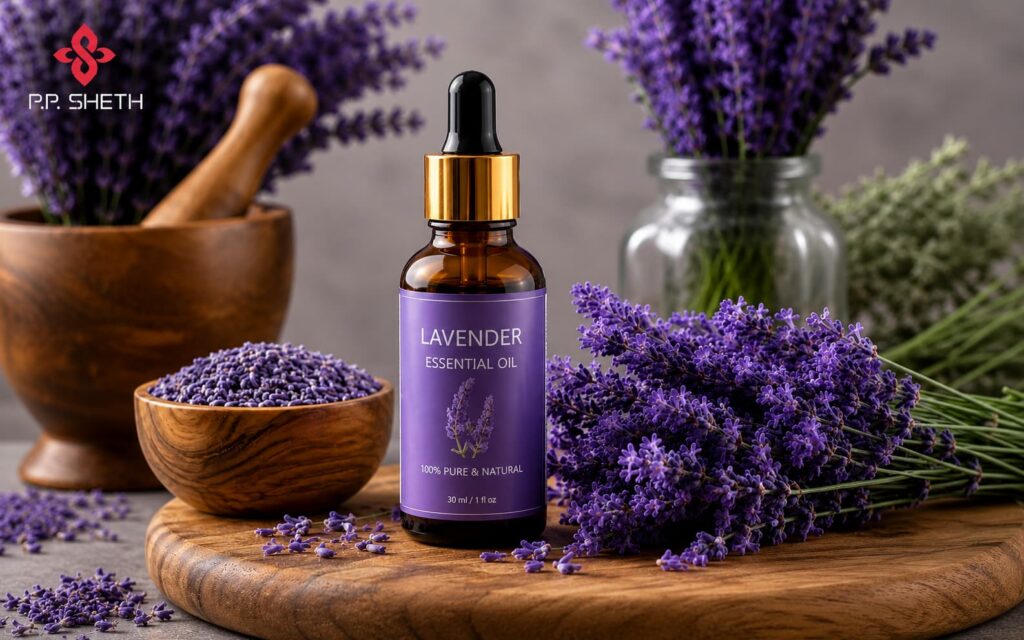
What Is Lavender Essential Oil?
Lavender oil is an essential oil that is derived from lavender flowers of the genus Lavandula. The oil is most often manufactured through distillation and brings a scented liquid that is noted for its floral, herbal, and sweet-smelling aroma.
The essential oil is much sought after because of its use in so many things like skin and hair care products, health products, perfumes, and therapeutic products. The manufacturers prefer using premium-quality steam-distilled lavender oil because of consistency, purity, and therapeutic benefits.
How Lavender Essential Oil Is Manufactured
The quality of lavender oil depends largely on the method of production and extraction.
The standard production process is:
- Harvesting lavender flowers at peak bloom.
- Cleaning and grading the product.
- Steam distillation of flowering tops.
- Gathering and separating the oil.
- Filtration and quality testing.
- Packaging in controlled conditions
A reliable lavender oil manufacturer follows strict quality controls throughout the production process to maintain purity and preserve volatile aromatic compounds.
Chemical Composition and Quality Markers
The chemical content of lavender oil is credited for its effectiveness as well as its appealing aroma.
Lavender oil’s main components are:
- Linalyl
- Acetate of linalyl
- Lavandulol
- Terpinene-4-ol
- Beta-caryophyllene
Premium quality lavender oil contains balanced levels of linalool and linalyl acetate.
The quality parameters of lavender oil are as follows:
- Consistent aroma profile
- Natural color and clarity
- GC-MS test compliance
- No synthetic additives
- Proper botanical identification
Benefits and Applications Across Industries
Lavender essential oil is a versatile product with many uses, and it is a popular ingredient in many industries.
Cosmetics & Personal Care
- Creams
- Lotions
- Face serums
- Hair oils
- Bathing products
Aromatherapy & Wellness
- Diffuser blends
- Aromatherapy oils
- Stress relief products
Fragrance Industry
- Perfume
- Perfume
- Body mists
- Fragrances for home use
Soap & Candle Manufacturing
- Homemade soaps
- Fragrant candles
- Waxes
Pharmaceutical & Herbal Products
- Medicinal ointments
- Wellness formulations
Due to its great popularity, cosmetic grade lavender oil is one of the most popular ingredients today.
How to Choose High Quality Lavender Essential Oil
When purchasing lavender oil, it is important for buyers to consider factors other than price.
Consider:
- Botanical species used
- Extraction method
- Country of origin
- Aroma consistency
- Batch traceability
- Purity documentation
- Supplier reputation
Partnering with an experienced lavender oil supplier can guarantee stability in terms of quality and supply chain.
Quality Testing Every Buyer Should Verify
Third party examination is critical when acquiring large volumes of products.
Key test procedures include the following:
- Gas Chromatography-Mass Spectrometry (GC-MS)
- Analysis of specific gravity
- Refractive index assessment
- Optical rotation determination
- Microbial analysis
- Heavy metal testing
- Pesticide residue testing
These tests validate the authenticity of the products and the conformity to international quality standards.
Certifications Every Global Buyer Should Look For
The certification indicates how devoted a manufacturer is to quality, safety, and adherence to laws and regulations.
Some certifications worth noting are:
- ISO 9001
- GMP (Good Manufacturing Practices)
- USDA Organic
- COSMOS Certification
- ECOCERT
- Halal Certification
- Kosher Certification
- REACH Compliance
- IFRA Compliance
The specifics of required certification will vary depending on your target market.
Essential Oils and Carrier Oils That Blend Well with Lavender
Lavender goes well with numerous essential and carrier oils.
Complementary Essential Oils
- Bergamot
- Lemon
- Frankincense
- Geranium
- Rosemary
- Cedarwood
- Eucalyptus
- Chamomile
Popular Carrier Oils
- Jojoba oil
- Sweet almond oil
- Argan oil
- Coconut oil
- Grapeseed oil
- Sunflower oil
These combinations are very popular in personal care products.
Bulk Procurement Guide for Global Buyers
The process of buying bulk lavender oil includes a well planned sourcing strategy. The key factors of consideration are:
- Annual volume requirements
- Continuity of supply
- Lead times
- Minimum order quantity (MOQ)
- Price structure
- Documentation support
- Private labeling capabilities
- Export experience
Longer contracts can offer better price stability and inventory management.
Supplier Evaluation Checklist
Before the selection of a supplier, one should verify:
- Proven industry experience
- Transparent sourcing approach
- Third party laboratory reports
- Consistent batch quality
- Regulatory Compliance
- Export capabilities
- Adequate production capacity
- Technical support capability
Packaging, Storage and Export Documentation
Appropriate packing ensures product integrity in shipment and storage processes.
Recommended packaging options:
- Aluminum containers
- HDPE drums
- Stainless steel containers
- Amber bottles (in case of small quantities of products)
Storage recommendations:
- Cool and dry place
- Out of sunlight
- Airtight sealed materials
- Temperature-controlled conditions
Common export documentation includes:
- Certificate of Analysis (COA)
- Material Safety Data Sheet (MSDS)
- Technical Data Sheet (TDS)
- Certificate of Origin
- Phytosanitary documentation (if it is required)
Sustainable & Ethical Lavender Sourcing
Across the globe, sustainability has turned into an important criterion for companies that deserve the title of brands.
The fundamental aspects of responsible sourcing include:
- Principles of sustainable farming
- Water conservation techniques
- Usage of appropriate labor practices
- Reduction of pesticide usage
- Ability to trace the supply chain
- Support of the local farming communities
Brands are keen on working with companies that can prove their environmental and social responsibility.
Common Buying Mistakes to Avoid
Many purchasers make mistakes and receive products of low quality as a result of these mistakes.
Common mistakes include:
- Selecting suppliers only based on price
- Disregarding GC-MS analysis
- Not checking the authenticity of certificates
- Neglecting to ask for batch samples
- Ignoring traceability documents
- Choosing suppliers without export experience
Evaluating the source comprehensively allows minimising the risks connected with sourcing.
Expert Tips for Manufacturers and Formulators
Manufacturers and formulators should know some expert tips for improving the performance of formulation:
- Perform compatibility tests prior to production.
- Ask for mutliple batch samples.
- Check allergen declarations.
- Keep records of supplier qualifications.
- Develop long-term partnerships with suppliers.
- Review regulatory requirements for destination markets.
- Monitor consistency via periodic testing.
These practices help maintain product quality and regulatory compliance.
Conclusion
Lavender essential oil is yet another one of the most adaptable and commercially significant natural components in various industries, like cosmetics, aromatherapy, wellness, fragrances, and personal care. By collaborating with a reliable lavender oil manufacturer and verifying related quality documentation, clients can benefit from its consistent ability, compliance with regulations, and trustworthy delivery. Buying premium quality lavender oil guarantees superior product formulations and the positive reputation of a brand in the competitive international markets.
FAQs
What is lavender essential oil?
Lavender essential oil is a concentrated aromatic oil obtained from lavender flowers by means of steam distillation. It has many applications in the health and beauty industry.
Which type of lavender is better for producing lavender oil?
Lavandula angustifolia (True Lavender) is the most popular type because of its smell and composition.
How is lavender essential oil extracted?
Commercially produced lavender oil is acquired through steam distillation of lavender flower tops.
What industries use lavender essential oil?
Cosmetics, skin care, aromatherapy, health and wellness, candles, soaps, and pharmaceuticals, among others, use lavender oil in their manufacturing processes.
How do I verify lavender oil quality?
Look for GC/MS results, certificates of analysis, purity tests, certifications, and batch tracking documents.
What certifications should a lavender oil supplier have?
ISO, GMP, USDA Organic, ECOCERT, COSMOS, Halal, Kosher, REACH compli