
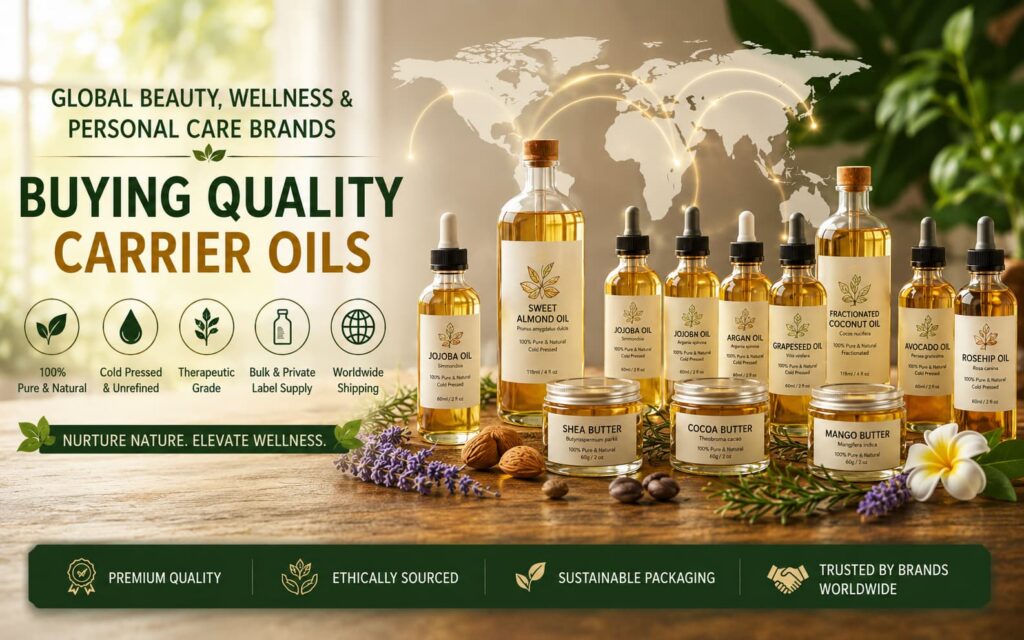
Carrier oils comprise indispensable components for cosmetics, skincare, haircare, aromatherapy, and massage products, as well as wellness formulations. In the case of international brands, searching for qualitycarrier oils of required quality includes much more than simply comparing prices. The sourcing process must take into account various factors such as botanical source, extraction method, purity, composition, certification, packaging, reliability of suppliers, etc. Whether ordering from a bulk quality carrier oils supplier, buying cosmetic grade carrier oils, or evaluating wholesale carrier oils, one has to develop a thorough buying plan.
Why Quality Carrier Oil Matters
The quality of the carrier oils impacts formulation stability, how it feels on the skin, ease of absorption, purity, and the product’s longevity. Low quality oils contain impurities, oxidation products, or adulterants, which can cause damage to the final product.
High quality carrier oils should have:
- Verified botanical name
- Standard fatty acid composition
- Low oxidation levels
- Reliable batch consistency
- Complete traceability
How to Choose the Right Carrier Oil for Your Products
The right quality carrier oils will vary depending on the intended application and the properties needed in the formulation. Consider:
- Skin or hair application
- Absorption rate
- Texture and viscosity
- Fatty acid composition
- Oxidative stability
- Extraction method
- Shelf life
- Regulations of the target market
For instance, jojoba oil is loved because of its light texture and stability, while coconut oil is chosen due to its versatility and longer shelf life.
Carrier Oil Comparison Guide
| Carrier Oil | Key Characteristics | Common Applications |
| Jojoba Oil | Lightweight, highly stable | Skincare, haircare, serums |
| Argan Oil | Rich, nourishing profile | Haircare, facial products |
| Almond Oil | Smooth, emollient | Massage, skincare |
| Grapeseed Oil | Lightweight, fast-absorbing | Serums, massage products |
| Coconut Oil | Versatile and stable | Haircare, body care |
| Avocado Oil | Rich and conditioning | Creams, hair masks |
Quality Testing Parameters Every Buyer Should Verify
Before making bulk purchases, request an up-to-date Certificate of Analysis (COA) and the related laboratory tests. The COA should detail the following important parameters:

- Fatty acid profile
- Acid value
- Peroxide value
- Iodine value
- Saponification value
- Refractive index
- Specific gravity
- Moisture and contaminants
- Microbial quality
- Presence of heavy metals and pesticide residues
GC-MS can be used to confirm authenticity and check for contamination in oils of this type.
Certifications Every Global Buyer Should Look For
Requirements of certification may vary in relation to the application and the destination market.
Examples of certifications and compliance documents include:
- ISO 9001
- GMP
- USDA Organic
- COSMOS
- ECOCERT
- Halal
- Kosher
- REACH compliance
- Allergen declarations
Buyers need to check if the certification is up to date and relevant to the particular facility and product.
10 Questions to Ask a Carrier Oil Supplier
Prior to selecting a supplier, be sure to enquire about:
- What is the source of the plant?
- What procedure is utilised for extraction?
- Where does the product come from?
- Can you provide a recent COA?
- Is it possible to trace the product?
- What tests are done on the product?
- What certifications do you have?
- What is your minimum order quantity?
- How is bulk product packaged?
- Can you send the required export documents?
Step-by-Step Bulk Procurement Process
- Identify product and quantity needs.
- Identify suitable suppliers.
- Ask for sample materials as well as technical documentation.
- Confirm that relevant documents have been submitted and lab tests performed.
- Test independently if necessary.
- Compare cost, minimum order, and lead time.
- Approve supplier and specifications.
- Place a test order.
- Inspect documentation and shipment condition.
- Establish ongoing quality monitoring.
Carrier Oil Applications by Industry
The uses of carrier oils fall into the following categories:
Cosmetics and skincare
- Lotions
- Serums
- Cleansers
- Body oils
Haircare
- Hair masks
- Scalp treatments
- Conditioning oils
Wellness and Aromatherapy
- Massage oils
- Essential oil formulations
- Therapeutic formulations
Pharmaceutical and Herbal Products
- Creams
- Botanical formulations
Personal Care
- Soaps
- Bath oils
- Body care formulations
Sustainable & Ethical Sourcing Practices
When sourcing raw materials, businesses now pay attention to social as well as environmental factors.
Responsible sourcing means the following:
- Using traceable supply chains
- Practicing sustainable farming
- Using water responsibly
- Practicing ethical labor
- Reducing the use of chemicals
- Supporting agricultural communities
Suppliers must demonstrate where their raw material originates and provide documentation to prove it.
Packaging, Storage & Export Documentation
In order to prevent oxidation of carrier oils, they must be shielded from heat, air, moisture, and sun.
Some common types of packaging involve the following:
- HDPE barrels
- Aluminum cans
- Stainless steel containers
- Amber glass bottles for smaller quantities
Typical export documentation includes the following:
- Certificate of Analysis
- Safety Data Sheet (SDS)
- Technical sheet
- Origin certificate
- Commercial invoice
- Packaging list
- Relevant regulatory or phytosanitary documents
Common Mistakes Buyers Should Avoid
Things to Avoid:
- Supplier selection based solely on price
- Not evaluating samples
- Accepting old Certificates of Analysis (COA)
- Not considering oxidation parameters in products
- Not checking on certifications
- Not looking into the origin of the plant-based product
- Placing large purchase orders without a test shipment
- Neglecting storage and shipping conditions
These errors can lead to poor quality, instability, and lost profit.
Expert Procurement Tips
To succeed in international sourcing:
- Use written specifications for the product.
- Compare as many suppliers’ samples at your disposal as possible.
- Perform independent tests on the most important parameters of the product.
- Keep the approved supplier list.
- Monitor each shipment that arrives.
- Negotiate agreements based on the forecasted volume of the delivery.
- Check whether the regulations in the destination country allow the importation of the product.
- Choose suppliers that have a solid record of experience in traceability.
Choosing a trustworthy bulk carrier oil supplier helps improve the overall stability of the procurement process.
Read also: Lavender Essential Oil: Complete B2B Buyer’s Guide
Conclusion
In order to obtain premium-quality carrier oils, the process of sourcing is very essential in recognising their capacity as well as their extraction, chemical composition, quality measures, packaging, and the level of ability of the seller. In the case of international beauty, well-being, and skincare companies, the procurement process must focus more on source qualities as well as traceability instead of just price. Buyers achieve product quality control when they assess samples, verify lab results, and set clear product standards.
FAQs
What are carrier oils?
Carrier oils are plant derived oils that are applied to dilute essential oils. Carrier oils are widely applied in skincare, haircare, massage therapy, aromatherapy, and health-related products.
How do I verify the quality of carrier oils before purchasing?
You should request the supplier to provide you with the current certificate of analysis, technical data sheet, and laboratory reports. Check the fatty acid profile, acid value, peroxide value, and microbiological quality.
What certifications should a carrier oil supplier have?
Depending on the market in which you are doing business, the applicable certifications could be ISO 9001, GMP, USDA Organic, COSMOS, ECOCERT, Halal, or Kosher.
What is the difference between cold-pressed and refined carrier oils?
Cold pressed carrier oils undergo minimum processing and have a more natural composition, while refined oils are further processed for a more neutral and consistent profile.
Why is GC-MS testing important for carrier oils?
GC-MS is beneficial in learning about chemical constituents as well as assessing authenticity and checking adulterations of carrier oils.
How do I choose the right quality carrier oils for cosmetic products?
Consider the product type, absorption rate, sensory characteristics of the carrier, fatty acid profile, oxidative stability, longevity, and formulation requirements.
What packaging options are available for bulk carrier oils?
Bulk carriers can be packed in containers made of different materials like HDPE drums, aluminium cans, stainless steel tanks, and amber bottles.