Essential oils have become a familiar ingredient in modern skincare. You’ll find them in everything from facial oils and cleansers to creams, serums, body lotions, and other botanical beauty products. These concentrated plant extracts are valued not only for their distinctive aromas but also for the sensory and cosmetic qualities they can bring to a formulation.
In 2026, skincare brands continue to explore botanical ingredients as consumers show growing interest in plant-based products and more sensory skincare experiences.
So, what exactly do essential oils do in skincare? This guide looks at essential oils in skincare products, including their common uses, potential benefits, suitable applications, and important safety considerations.
What Are Essential Oils in Skincare?
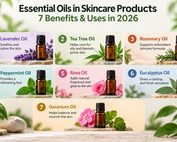
Essential oils are concentrated aromatic extracts derived from plants such as lavender, tea tree, rosemary, peppermint, rose, and eucalyptus. They contain naturally occurring compounds that give each oil its characteristic scent and contribute to its cosmetic properties.
In skincare formulations, essential oils are typically used in relatively small amounts. Depending on the oil and the product, they may add fragrance, create a refreshing or relaxing sensory experience, or contribute specific cosmetic properties.
Because they are highly concentrated, essential oils generally should not be applied directly to the skin without suitable dilution or formulation.
7 Benefits and Uses of Essential Oils for Skin
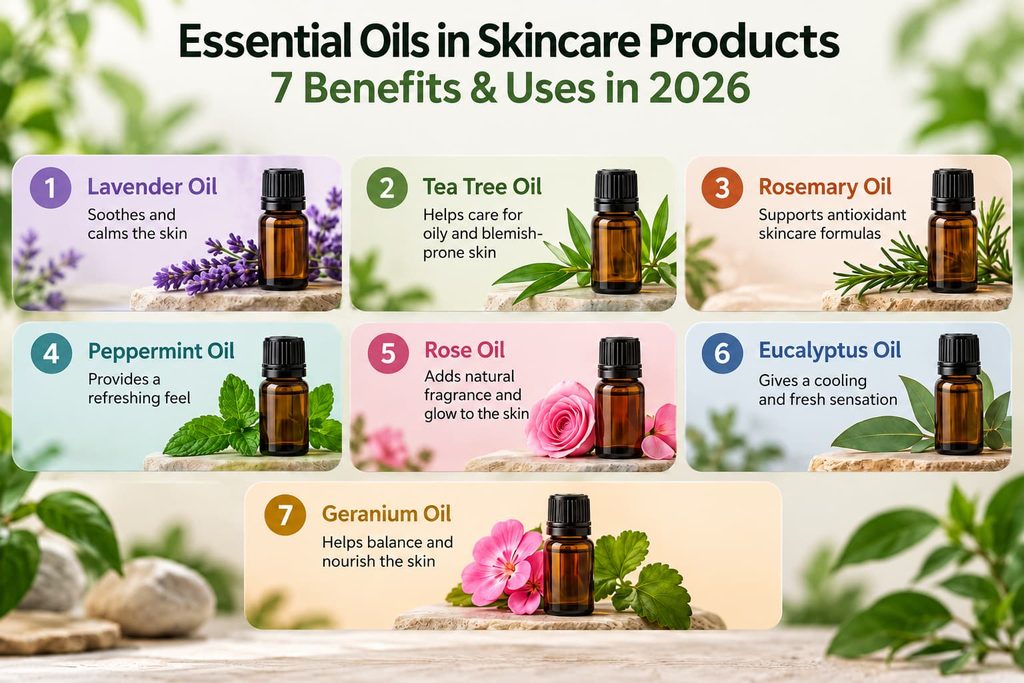
Not all essential oils are the same. Their properties can vary significantly depending on their natural chemical composition and how they are formulated. Here are seven common ways essential oils are used in skincare.
1. Adds Natural Fragrance
Fragrance is one of the most common reasons essential oils are included in skincare products.
Oils such as lavender, rose, geranium, orange, lemon, and ylang-ylang can give products distinctive botanical aromas. They may be found in body lotions, facial products, soaps, bath products, and other personal-care formulations.
For brands with a botanical or naturally inspired positioning, essential oils can also provide an alternative to certain synthetic fragrance ingredients.
2. Supports Antioxidant-Focused Formulations
Some essential oils contain naturally occurring compounds associated with antioxidant activity. Antioxidants are commonly incorporated into skincare formulations because they can help protect ingredients from oxidative processes and support products designed with skin protection in mind.
Rosemary and certain citrus oils, for example, are often explored for their antioxidant properties.
That said, an essential oil’s performance depends on several factors, including its chemical composition, concentration, stability, and the rest of the formulation.
3. Used in Products for Oily Skin
Certain essential oils are commonly included in products formulated for oily or blemish-prone skin.
Tea tree oil is one of the best-known examples. It can be found in cleansers, spot-care products, facial gels, and other formulations aimed at oily skin.
Concentration and formulation matter here. Because essential oils are highly concentrated, using too much may increase the risk of irritation for some people.
4. Creates a Fresh, Refreshing Skin Feel
Some essential oils are chosen primarily for the cooling, fresh, or invigorating sensory experience they provide.
Peppermint and eucalyptus oils, for instance, are sometimes used in body washes, foot creams, massage products, and other personal-care products.
In these applications, their primary contribution may be the overall sensory experience rather than a specific treatment effect.
5. Adds Botanical Appeal to Beauty Products
Interest in botanical and plant-derived ingredients has made essential oils a popular choice for brands looking to create a more plant-inspired product identity.
Ingredients such as lavender, rose, and rosemary can contribute to the botanical appeal of a skincare product and may attract consumers who prefer plant-focused personal-care formulations.
However, it’s worth remembering that natural does not automatically mean suitable for every skin type. Safety, concentration, and overall formulation quality still matter.
6. Used in Relaxation-Focused Skincare
Some essential oils are closely associated with relaxation and sensory rituals.
Lavender and chamomile-associated aromas, for example, are often used in bath products, body oils, massage blends, and evening skincare routines.
In these types of products, the aroma can be an important part of the experience, helping create the relaxing atmosphere the product is designed to provide.
7. Supports Specialty Skincare Formulations
Essential oils are also used in a range of specialty personal-care products, including facial oils, body oils, massage blends, soaps, bath products, and scalp-care formulations.
When developing these products, formulators consider factors such as the oil’s chemical composition, aroma, compatibility with other ingredients, and the intended purpose of the finished product.
Essential Oils Commonly Used in Skincare
| Essential Oil | Common Skincare Use | Popular Product Types |
|---|---|---|
| Lavender Oil | Fragrance and calming sensory experience | Creams, body oils, soaps |
| Tea Tree Oil | Products for oily or blemish-prone skin | Cleansers, gels, spot products |
| Rosemary Oil | Botanical and antioxidant-focused formulations | Hair care, facial products |
| Peppermint Oil | Refreshing sensory effect | Body washes, foot care |
| Rose Oil | Fragrance and premium skincare | Serums, creams, facial oils |
| Eucalyptus Oil | Fresh aromatic experience | Body products, bath products |
| Geranium Oil | Floral fragrance | Creams, lotions, body oils |
How to Use Essential Oils in Skincare Formulations
Essential oils are highly concentrated, so they need to be handled carefully during formulation. They are generally incorporated at controlled concentrations and diluted in an appropriate carrier or product base.
For example, a formulator developing an oil-based skincare product may combine an essential oil with a carrier oil such as jojoba, sunflower, or coconut oil.
There is no single concentration that works for every product. The appropriate amount depends on the specific essential oil, the type of product being made, how it will be used, the target consumer, and applicable cosmetic safety requirements.
For facial products and formulations intended for sensitive skin, careful professional formulation is particularly important.
Essential Oil Safety for Skincare
Being plant-derived doesn’t automatically make an essential oil risk-free. Some people may experience irritation or allergic reactions, and certain oils can increase sensitivity to sunlight.
Before using an essential-oil-based skincare product, follow the manufacturer’s instructions carefully. When appropriate, consider patch testing, particularly if you have sensitive skin or are trying a new product.
It’s also important to understand the difference between essential oils and carrier oils. Essential oils are highly concentrated aromatic extracts, while carrier oils are generally used as base oils or dilution mediums.
Children, pregnant individuals, and people with sensitive skin may need additional precautions depending on the specific essential oil and product.
How Skincare Brands Use Essential Oils
Skincare manufacturers use essential oils for a variety of reasons, including fragrance, sensory appeal, botanical positioning, and formulation development.
The choice of oil often depends on the product’s purpose and target audience. For example, a luxury facial oil might use rose or geranium for its floral aroma, while a body-care product might use peppermint or eucalyptus to create a fresher sensory profile.
For manufacturers, consistent sourcing and quality control are also important. The composition of botanical oils can vary depending on factors such as plant variety, growing conditions, extraction method, and storage.
Essential Oils vs. Carrier Oils
| Feature | Essential Oils | Carrier Oils |
|---|---|---|
| Concentration | Highly concentrated | Generally less concentrated |
| Main purpose | Aroma and functional formulation properties | Base or dilution medium |
| Examples | Lavender, tea tree, peppermint | Jojoba, coconut, sunflower |
| Typical use | Used in small amounts | Can form a larger part of oil-based products |
| Direct application | Usually requires appropriate dilution | Commonly used as base oils |
Are Essential Oils Good for Every Skin Type?
No. There is no single essential oil that is suitable for everyone or every skin type.
Some people may tolerate a properly formulated essential-oil product without any issues, while others may experience redness, itching, dryness, or irritation. Facial skin can also be more sensitive than other areas of the body.
That’s why several factors need to be considered before using an essential-oil-based product, including the formulation, concentration, ingredient compatibility, and individual skin sensitivity.
Read also: Lavender Oil: Benefits, Uses, and Applications in Aromatherapy and Beyond
FAQs About Essential Oils in Skincare Products
Can essential oils be applied directly to the skin?
Most essential oils are highly concentrated and should not be applied directly to the skin. They are generally diluted or incorporated into a properly formulated skincare product.
Which essential oils are commonly used in skincare?
Lavender, tea tree, rosemary, rose, peppermint, eucalyptus, and geranium are among the essential oils commonly found in cosmetic and personal-care formulations.
Are essential oils suitable for sensitive skin?
Some people with sensitive skin may react to essential oils. Using a properly formulated product at an appropriate concentration is important, and users should always follow the product’s directions.
What is the difference between essential oil and carrier oil?
Essential oils are concentrated aromatic extracts derived from plants. Carrier oils, on the other hand, are typically vegetable oils used as a base or dilution medium in oil-based formulations.
Conclusion
Essential oils continue to play a role in modern beauty and personal-care formulations. Depending on the oil and how it is formulated, they can add fragrance, botanical appeal, sensory qualities, and other formulation properties.
For skincare brands and manufacturers, choosing the appropriate essential oil, concentration, sourcing quality, and formulation method is important for creating safe and consistent products. Consumers should likewise follow product directions and consider their individual skin sensitivity when introducing a new essential-oil-based product into their skincare routine.
Most Recent Posts