
Have you ever noticed a perfume that smells clean, warm, woody, and fresh at the same time? A fragrance that stays on your skin for hours without feeling too heavy? Ambroxan may be one of the ingredients behind that experience.
Ambroxan is a popular fragrance ingredient used in modern perfumery. It is known for its warm amber-like smell, soft woody notes, and ability to add depth to a perfume. It is also valued for helping a fragrance last longer and giving it a smooth finish.
Ambroxan in Perfumery is an important topic for fragrance developers who want to create warm, smooth, and long-lasting fragrances.
In this guide, we will explain what Ambroxan is, how it smells, where it is used, and how much to use when making a perfume.
What Is Ambroxan?
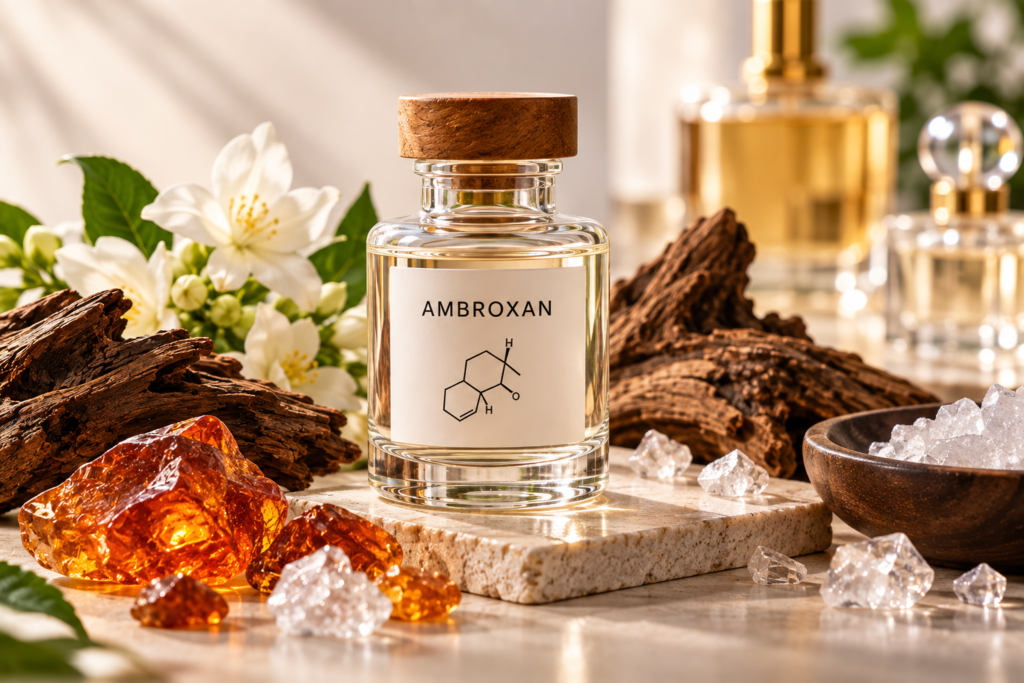
Ambroxan is a fragrance ingredient used to create a warm, woody, amber-like smell. It is often used as an alternative to the scent of natural ambergris, which has a long history in perfumery.
Natural ambergris is a rare material with a soft, warm, and slightly salty smell. Ambroxan offers a similar style of scent and gives perfumers a more consistent ingredient to work with.
Today, Ambroxan is used in many types of fragrances, including fine perfumes, personal care products, and other scented products.
It is especially useful when a perfume needs a smooth base, a warm finish, or a clean and modern character.
Is Ambroxan Natural or Synthetic?
Ambroxan is commonly available as a manufactured fragrance ingredient. Some production methods use materials from natural sources, while others use synthetic starting materials.
The exact source depends on the manufacturer and the product grade.
It is important to check the supplier’s technical documents if you need information about the source, purity, or quality of a particular Ambroxan product.
Why Is Ambroxan Used in Modern Perfumes?
Ambroxan is popular because it can do more than add a pleasant smell.
It can help a fragrance feel smoother, give the base more depth, and support the overall scent. It also works well with many other perfume ingredients, making it useful for different fragrance styles.
Its warm and clean character makes it suitable for both simple perfumes and more complex fragrance blends.
Ambroxan Odor Profile: What Does It Smell Like?
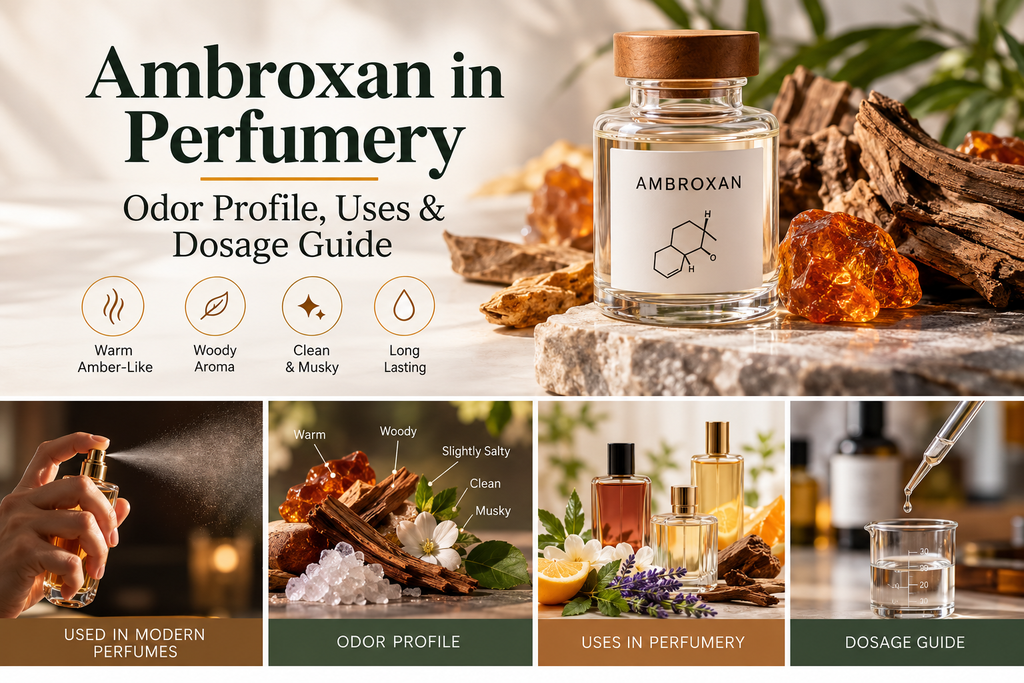
The smell of Ambroxan is often described as warm, woody, clean, and slightly musky. It also has an amber-like character with a dry and sometimes slightly salty feel.
Unlike very sweet ingredients, Ambroxan does not usually smell like sugar, vanilla, or caramel. Its warmth is more natural and smooth.
The exact smell may change depending on the grade, amount used, and the other ingredients in the perfume.
1. Warm and Amber-Like
Ambroxan adds a soft warmth to a fragrance. It can make a perfume feel rich and smooth without making it too sweet.
This quality makes it useful in amber perfumes, woody blends, and fragrances designed for evening wear.
2. Woody and Dry
Ambroxan has a gentle woody character. It can bring a dry, smooth finish to a perfume and work well with ingredients such as cedarwood, sandalwood, and other woody notes.
It is especially useful when a fragrance needs warmth without becoming too heavy.
3. Clean and Musky
Another important part of its smell is its clean, soft, skin-like character.
It can make a fragrance feel fresh and smooth, especially when blended with musk, floral, or fresh notes.
This is one reason why Ambroxan is often used in modern everyday fragrances.
4. Slightly Salty and Mineral-Like
Some people notice a light salty or mineral-like smell in Ambroxan.
This quality can give a perfume a fresh, airy feel. It is also useful in marine-inspired fragrances, where perfumers want a clean scent with a warm base.
5. Long-Lasting and Smooth
Ambroxan is valued for its lasting power. It can remain noticeable during the later stages of a fragrance and help support the base notes.
Its smell may become more noticeable as the brighter notes of a perfume fade.
However, the final lasting time depends on the full formula, the perfume concentration, and the skin or surface where it is used.
Main Uses of Ambroxan in Perfumery
Ambroxan is a flexible fragrance ingredient that can be used in many different perfume styles.
Here are some of its most common uses.
1. Creating Warm Amber Fragrances
Ambroxan is widely used in amber-style perfumes.
It adds warmth and depth while keeping the fragrance smooth. It can also work with ingredients such as labdanum, vanilla, and woody materials to create a richer scent.
For example, a perfumer may combine Ambroxan with warm resins and soft woods to create an elegant evening fragrance.
2. Making Fresh Perfumes Feel Fuller
Fresh perfumes often contain citrus, green, or light floral notes.
These notes can smell bright and pleasant, but they may not provide enough depth on their own.
Ambroxan can help support the base and make the overall fragrance feel more complete.
It works well with notes such as bergamot, lemon, lavender, and fresh herbs.
3. Adding Depth to Woody Perfumes
Ambroxan can give woody fragrances a smooth and modern finish.
It works well with cedarwood, sandalwood, vetiver, and patchouli. These ingredients can create a balanced fragrance with both fresh and warm qualities.
It can also help soften a woody blend that feels too sharp or dry.
4. Supporting Long-Lasting Fragrances
One of the main reasons perfumers use Ambroxan is to support the lasting power of a fragrance.
It is a useful material for the base of a perfume because it can remain noticeable after many of the lighter notes have faded.
However, Ambroxan does not automatically make every perfume last all day. The final result depends on the full formula, the amount used, and the other ingredients.
5. Creating Modern Skin Scents
Skin scents are designed to smell soft, clean, and close to the skin.
Ambroxan can be used with musk and other smooth fragrance ingredients to create this effect.
The result may feel warm, fresh, and natural rather than very strong or sweet.
6. Improving Fragrance Blends
Ambroxan can also help bring different parts of a perfume together.
It may connect fresh top notes with warm base notes and make the fragrance feel more balanced.
This is especially useful when creating perfumes with several different fragrance ingredients.
How Much Ambroxan Should You Use in Perfume?
The right Ambroxan dosage depends on the type of perfume, the strength you want, and the other ingredients in the formula.
There is no single percentage that works for every fragrance.
For many perfume development projects, a useful starting point is around 0.5% to 3% of the fragrance concentrate. Higher amounts may be used when a stronger amber character is desired, but the result should always be tested.
Some supplier guidance gives a wider usage range, such as 0.1% to 10%, depending on the application and formula.
These ranges are starting points, not fixed rules for every finished product.
Suggested Ambroxan Dosage Guide
| Fragrance Style | Suggested Starting Range |
| Light and fresh perfume | 0.5%–1% |
| Floral and woody perfume | 1%–2% |
| Amber and woody perfume | 1%–3% |
| Strong amber-focused perfume | 3%–5% |
| Higher-dose fragrance experiments | 5%–10% |
Important: These are suggested trial ranges for the fragrance concentrate, not universal safety limits. The correct amount depends on the material grade, final product type, and applicable fragrance safety requirements.
For a new formula, it is better to begin with a lower amount and increase it slowly after testing.
Example: How to Use Ambroxan in a 100 g Perfume Concentrate
Suppose you are preparing a 100 g fragrance concentrate and want to test Ambroxan at 1%.
The calculation is simple:
100 g × 1% = 1 g Ambroxan
For a 2% trial:
100 g × 2% = 2 g Ambroxan
For a 3% trial:
100 g × 3% = 3 g Ambroxan
This means you would use 1 g, 2 g, or 3 g of Ambroxan in the 100 g concentrate, respectively.
If you use a diluted Ambroxan solution instead of the pure material, remember that the amount of the solution is not the same as the amount of active Ambroxan.
For example, a 10% Ambroxan solution contains 10% Ambroxan and 90% solvent. Your calculation must account for that difference.
How to Blend Ambroxan with Other Fragrance Ingredients
Ambroxan works well with many fragrance ingredients. The best combination depends on the type of perfume you want to create.
Ambroxan and Bergamot
Bergamot adds a bright citrus smell, while Ambroxan gives the fragrance a warm and smooth base.
This combination works well for fresh everyday perfumes.
Ambroxan and Lavender
Lavender adds a clean herbal smell. When blended with Ambroxan, it can create a fresh and balanced fragrance with a soft woody finish.
This combination is suitable for many modern aromatic perfumes.
Ambroxan and Cedarwood
Cedarwood adds a dry woody smell, while Ambroxan brings warmth and smoothness.
Together, they can create a simple and elegant woody fragrance.
Ambroxan and Musk
Musk can add softness and a clean skin-like feel.
When used with Ambroxan, it can help create a smooth fragrance that feels comfortable and easy to wear.
Ambroxan and Vanilla
Vanilla adds sweetness and warmth.
Ambroxan can balance this sweetness with a dry woody character, helping the fragrance feel less heavy.
The final result depends on the type of vanilla material and the amount of each ingredient used.
How to Work with Ambroxan: Practical Tips
Working with Ambroxan is easier when you test it carefully and keep your formula simple.
Here are some useful tips for perfume makers.
1. Start with a Small Trial
Do not add a large amount of Ambroxan to your first formula.
Start with a small batch and test different levels. This will help you understand how the ingredient changes the fragrance.
2. Check the Material Form
Ambroxan may be supplied in different forms, including solid material or a prepared dilution.
Some solid grades may need gentle warming or a suitable solvent to dissolve properly.
Always follow the supplier’s handling instructions. Avoid direct heating or open flames, especially when working with alcohol-based materials.
3. Test the Fragrance on a Blotter
A perfume blotter can help you understand how the fragrance smells after blending.
Check the scent immediately after applying it, then again after a few hours.
This can help you notice changes in the fresh notes, middle notes, and base.
4. Keep Notes of Every Trial
Write down the amount of Ambroxan and all other ingredients used in each formula.
This makes it easier to repeat a successful blend or make small changes when needed.
5. Check Safety and Product Requirements
Before using Ambroxan in a finished perfume or another scented product, check the supplier’s safety documents and the latest applicable IFRA guidance.
The safe amount may differ depending on the type of product and how it will be used.
Do not apply undiluted Ambroxan directly to the skin.
Common Mistakes to Avoid When Using Ambroxan
Ambroxan is a useful ingredient, but using too much or blending it without testing can affect the final fragrance.
Here are some common mistakes to avoid.
Using Too Much Ambroxan
A high amount may make the perfume smell too dry, sharp, or strongly focused on amber and wood.
Start with a lower percentage and increase it only when needed.
Expecting Ambroxan to Do Everything
Ambroxan can support a fragrance, but it cannot replace the need for a balanced formula.
A good perfume needs the right combination of fresh, floral, woody, musky, and other notes.
Ignoring the Other Ingredients
The same amount of Ambroxan may smell different in two formulas.
For example, it may feel softer with musk and vanilla but more dry and woody with cedarwood.
Always test it with the full fragrance blend.
Skipping the Final Product Test
A fragrance concentrate may smell different after it is diluted into the finished perfume.
Always test the final product at its intended concentration before making a large batch.
Frequently Asked Questions About Ambroxan
1. What is Ambroxan used for in perfumery?
Ambroxan is used to add a warm amber-like smell, smooth woody notes, and depth to perfumes. It can also support the lasting power of a fragrance.
2. What does Ambroxan smell like?
Ambroxan is commonly described as warm, woody, clean, slightly musky, and amber-like. Some grades may also have a light salty or mineral-like smell.
3. Is Ambroxan a top note or a base note?
Ambroxan is mainly used as a base note because its warm, woody character can remain noticeable after the lighter notes fade. It may also influence the overall fragrance from the early stages.
4. How much Ambroxan should I use in a perfume?
A common starting range for perfume concentrate trials is around 0.5% to 3%. Some formulas may use more, depending on the desired smell and the supplier’s guidance.
The correct amount should always be tested in the full formula.
5. Does Ambroxan make perfume last longer?
Ambroxan is valued for its lasting power and can support the base of a fragrance. However, the final lasting time depends on the complete formula, perfume concentration, and application.
6. Can Ambroxan be used in fresh perfumes?
Yes. Ambroxan works well with citrus, lavender, marine, and other fresh notes. It can add warmth and depth without making the fragrance overly sweet.
7. Can beginners use Ambroxan for perfume making?
Yes. Beginners can work with Ambroxan by starting with small trials, using accurate measurements, and following the supplier’s handling instructions.
A prepared dilution may be easier to measure than a small amount of solid material.
Conclusion
For perfume manufacturers and fragrance developers, understanding Ambroxan in Perfumery can help create more balanced and well-rounded fragrances.
Whether you are developing a fresh everyday perfume, a woody fragrance, or a rich amber blend, Ambroxan can help bring the formula together.
The key is to use the right amount. Start with a small trial, test it with other ingredients, and adjust the formula based on the final smell.
For perfume manufacturers and fragrance developers, understanding Ambroxan’s odor profile and dosage can help create more balanced and well-rounded fragrances.
At P.P. Sheth Aromas Pvt. Ltd., we understand the role that quality fragrance ingredients play in perfume development. Choosing the right raw materials and using them correctly can make a real difference to the final fragrance.